

When Fewer Healthy Lives Stay in the Marketplace: What Insurers Need to Prepare For ?
The ACA Marketplace is entering a more difficult phase, and insurers are already seeing the effects. After several years of enrollment growth driven by enhanced subsidies, participation patterns are beginning to shift. As affordability pressures rise, healthier individuals are more likely to reassess coverage decisions. What remains is a risk pool that is increasingly concentrated with members who require more frequent and higher-cost care.
For insurers, this is not a distant policy debate. It shows up quickly in claims experience, pricing volatility, and underwriting pressure.
The real question is no longer whether risk is rising.
It is whether insurers can identify it early, measure it accurately, and manage it consistently.
A Risk Pool That’s Quietly Changing
Recent CMS Marketplace data shows that enrollment momentum is softening as enhanced premium subsidies expire. While overall participation remains significant, the composition of the pool is shifting.
When affordability becomes strained, healthier members are typically the first to exit. The result is a marketplace where utilization trends skew higher and claims variability increases.
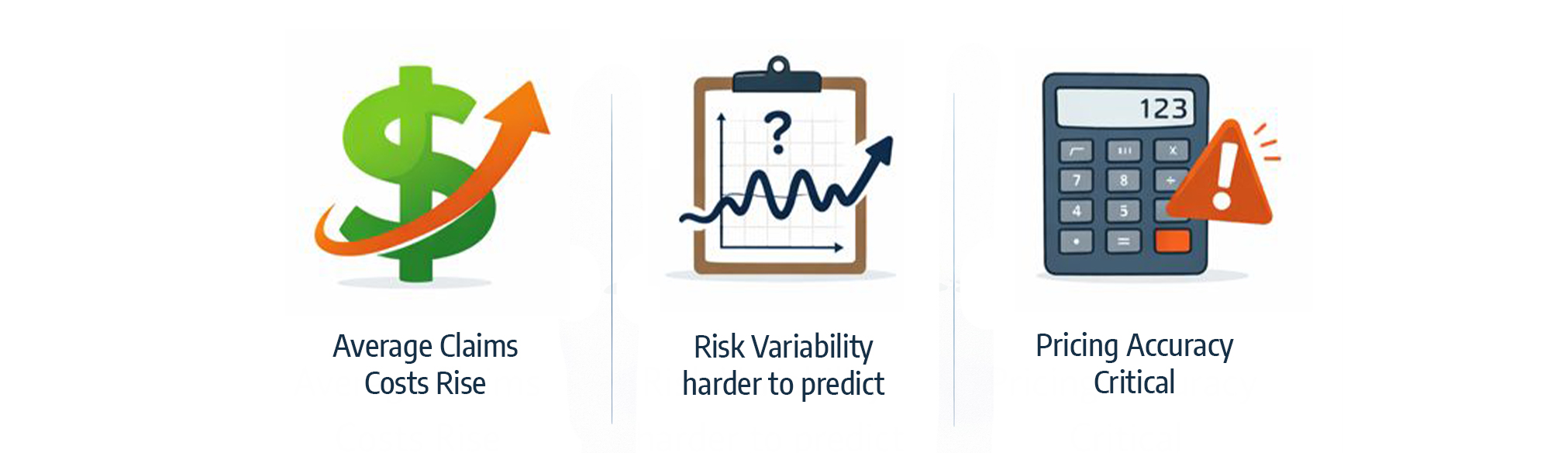
For insurers, this creates three immediate challenges:
Average claims costs rise as lower-utilization lives leave the pool
Risk predictability declines, especially across regions and submission types
Pricing accuracy becomes critical, with less room for assumptions or late adjustments
This is not a temporary fluctuation. Policy analysts have long warned that declining participation among healthier individuals can weaken risk pools and force insurers into more defensive pricing strategies.
Why This Market Signal Matters Now
Reporting from Reuters has highlighted the financial impact of subsidy changes, with some enrollees facing sharp premium increases year over year. When those increases coincide with tighter household budgets, insurers often see selective disenrollment rather than broad-based attrition.
That selective exit matters.
It accelerates risk concentration and increases pressure on underwriting teams to get decisions right the first time. In a market like this, small misjudgments compound quickly across a portfolio. For insurers, the margin for error continues to narrow.
Where Traditional Underwriting Models Start to Break Down
Many underwriting workflows were designed for a more balanced and predictable risk environment. As the marketplace shifts, those workflows begin to show strain. Submission data is often inconsistent or incomplete, forcing underwriters to spend time validating inputs instead of evaluating risk. Visibility into high-cost claimants or emerging utilization patterns frequently arrives late in the process — sometimes after pricing decisions are already constrained.
Manual, spreadsheet-driven processes make this harder to manage at scale. Underwriting rules and assumptions may live across multiple files, systems, or institutional knowledge, leading to inconsistent application across teams and regions.
When the risk pool is already tilted toward higher utilization, these gaps don’t just slow teams down.
They amplify portfolio risk.
What Insurers Need in a Higher-Risk Marketplace
Operating confidently in a marketplace with fewer healthy lives requires more than experience and judgment alone. It requires structure. Insurers need:
Standardized, trusted data at intake, so underwriters are not compensating for gaps downstream
Early visibility into risk concentration, before pricing is finalized
Consistent application of underwriting logic, regardless of volume or region
Faster decisions without sacrificing accuracy, even as complexity increases
This is no longer just about efficiency.
It is about protecting portfolio performance while remaining competitive.
How DataHub Supports Insurers in This Environment
DataHub is built to support insurers operating under exactly these conditions. By centralizing underwriting data and embedding intelligence directly into the workflow, DataHub helps carriers maintain control as marketplace risk intensifies. Submission data across census, claims, and broker files is automatically ingested and normalized, reducing noise and rework at the very start of underwriting. Risk signals — including potential high-cost claimants and utilization patterns — surface earlier, giving underwriters better context before pricing decisions are locked in.
Underwriting rules are applied consistently across teams and volumes, helping carriers maintain pricing discipline even as variability increases. Downstream corrections, audit exposure, and avoidable rework caused by incomplete or inconsistent data are significantly reduced. The result is not just faster underwriting.
It is underwriting decisions insurers can stand behind.

Turning Marketplace Pressure into an Advantage
Fewer healthy people in the marketplace will continue to put pressure on insurers. That pressure is unlikely to ease in the near term. But insurers that invest in visibility, consistency, and intelligent automation are better positioned to manage rising risk proactively, rather than reacting after the fact.
DataHub helps insurers move from guessing under pressure to deciding with confidence. Because in a marketplace where risk is rising, the advantage does not come from avoiding complexity. It comes from controlling it.